Legacy of Dead symbols explained
Symbols and Paytable Explained
The wild, scatter, and expanding-symbol mechanics that decide how this Egyptian slot pays.
- Reels
- 5x3
- Payback
- 96.58%
- Top win
- 5000x
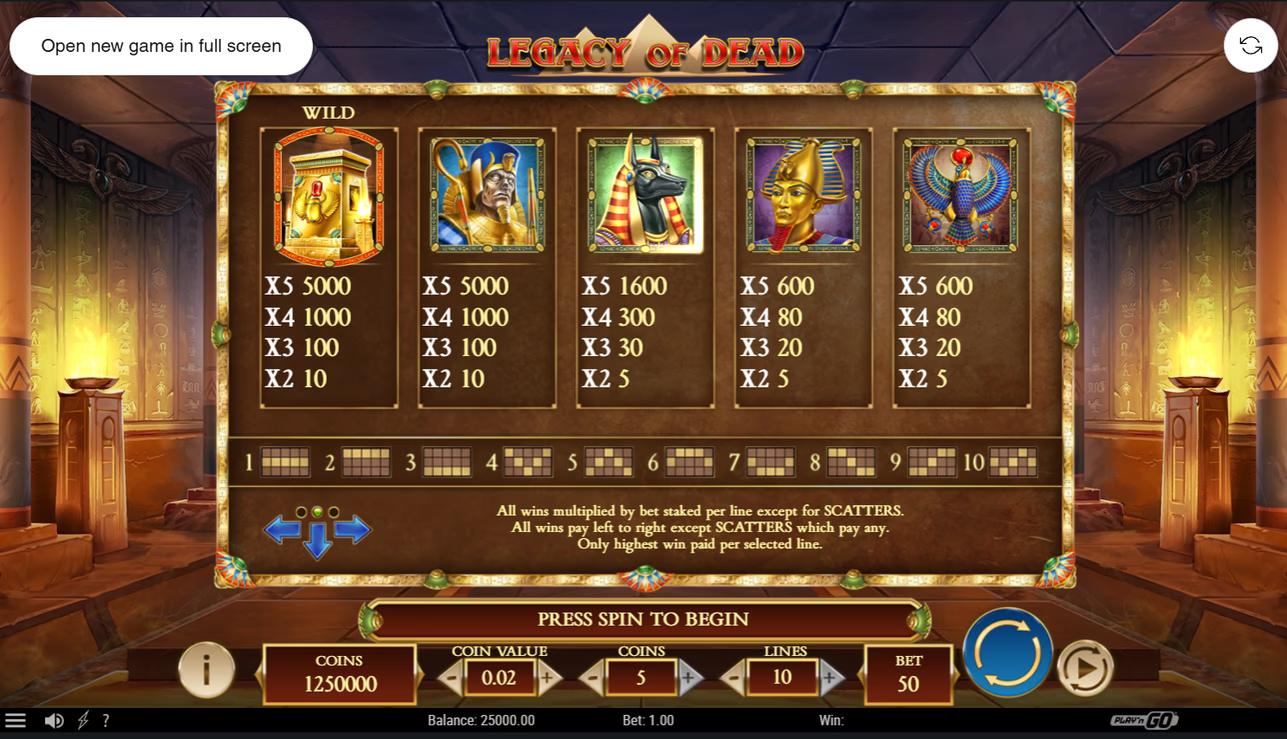
Legacy of Dead is built around one dual-purpose symbol, the Burial Chamber icon, which works as both wild and scatter, plus ten standard symbols split between low card royals and Egyptian deities. There is no dedicated multiplier symbol on the reels: value instead comes from the top-tier deity symbol, from the wild/scatter's own line payout, and from the expanding-symbol mechanic that only switches on during free spins.
- Burial Chamber symbol doubles as wild in the base game and scatter for triggering free spins
- Tutankhamun/Mummy icon is the highest-paying regular symbol
- Any doubling of a win comes from the separate gamble feature, not from a symbol on the reels
How to read the paytable before you spin
- Open the in-game paytable (the info/i icon) to check the exact payout values configured for your session
- Separate the ten standard symbols into card royals (10, J, Q, K, A) and Egyptian figures (Horus, a Pharaoh-style icon, Anubis, Tutankhamun)
- Find the Burial Chamber symbol and note both its wild function and how many scatters are needed to trigger free spins
- Check the free spins section of the paytable to see which symbol type can expand once the feature starts
Where this symbol set fits in the release history
- 2020 — Legacy of Dead released by Play'n GO, carrying over the Book-style paytable format and its wild/scatter expanding symbol.
Why the wild/scatter symbol carries more weight than any multiplier
Because Legacy of Dead has no dedicated multiplier symbol, the payout swing in this game rests almost entirely on two things: how the Burial Chamber wild/scatter lands, and which regular symbol gets picked to expand once free spins begin. A run of low card royals produces steady, small returns; a Burial Chamber landing across several reels, or a premium deity symbol expanding across a full reel during the bonus, is where the game's high volatility actually shows up.
Symbol tiers and how each one pays
The ten standard symbols split cleanly into two tiers. The low tier, 10, J, Q, K, and A, functions the way it does in most Egyptian-themed titles: frequent hits, modest returns, and a role that is mostly about keeping the reels active between bigger swings. K and A sit slightly above 10, J, and Q in payout, but none of the five card royals is designed to move the balance much on its own.
The higher tier is where the theme comes through. Horus and a mid-tier Pharaoh or eagle-style figure form the first premium band, followed by Anubis, and finally the Tutankhamun or Mummy-mask icon, which is the strongest regular symbol in the game. This top symbol is also unusual for its low-count payout: it can pay from just two matching symbols on a line starting from reel one, which is a deliberate concession to the game's otherwise unforgiving math.
The Burial Chamber symbol sits above all of them functionally, if not always in raw payout. As a wild, it substitutes for any standard symbol to complete a line. As a scatter, it pays anywhere on the reels for three or more appearances and triggers the free spins round. In practical terms, this one symbol carries responsibility that other slots split across two or three separate icons.
There is no multiplier symbol printed anywhere in the paytable. Reviewers who describe the game as having multiplier-like swings are really describing two other things: the expanding-symbol mechanic in free spins, and the optional gamble feature that lets a player double or attempt to quadruple a win after a spin, using a straightforward suit or colour guess rather than a symbol-driven multiplier.
Inside free spins, the game selects one regular pay symbol to become the expanding symbol for that round. When it lands, it covers its entire reel and pays as though it appeared on every position, which is where most of the game's larger results come from. Retriggers can add further expanding symbols on top of the first, and because the selection is drawn from the regular symbol set, it is not restricted to the premium tier alone.
How this symbol design compares to related Play'n GO titles
| Book of Dead | Uses the same wild/scatter and expanding-symbol template, but wrapped in an Egyptologist storyline with its own set of deity symbols and payout weighting. |
|---|---|
| Legacy of Egypt | Shares a similar Egyptian deity cast, but distributes symbol values differently and does not lean on the same single wild/scatter icon for both roles. |
Common questions about the symbols
Does the Burial Chamber symbol pay on its own, separate from its wild and scatter roles?
Yes. Beyond substituting as a wild and triggering free spins as a scatter, three or more Burial Chamber symbols anywhere on the reels also produce their own scatter payout.
Can the expanding symbol during free spins be the same icon as the wild/scatter?
No. The expanding symbol is drawn from the regular pay symbols, not from the Burial Chamber icon, so it behaves as an enlarged standard symbol rather than an enlarged wild.
Is there an actual multiplier symbol on the reels?
There is not. Any doubling of a payout comes from the separate gamble round after a spin, not from a symbol printed in the paytable.
Which regular symbol pays the most before the bonus round even starts?
The Tutankhamun or Mummy-mask icon is the strongest standard symbol, and it is also the only high symbol that can pay from just two matches on a line.
Can a low card symbol end up as the expanding one during free spins?
Yes. Because the expanding symbol is chosen from the full set of regular symbols, a low card royal can be selected, though bigger swings tend to come from a premium symbol expanding instead.
Try the paytable in demo mode first
Reviewing how the wild/scatter and expanding symbols behave is easier in a free session before wagering real money at a licensed operator. Age restrictions apply: 19+ in most of Canada, 18+ in Alberta, Manitoba, and Quebec.
Play at partner casino